
Barricade Tape and Warning Tape are often used interchangeably, but from a procurement and operational standpoint, they serve different purposes. Selecting the correct type directly impacts site safety, compliance, and long-term cost efficiency.
As manufacturers, we guide buyers based on risk level, access control requirement, deployment duration, and environmental exposure.
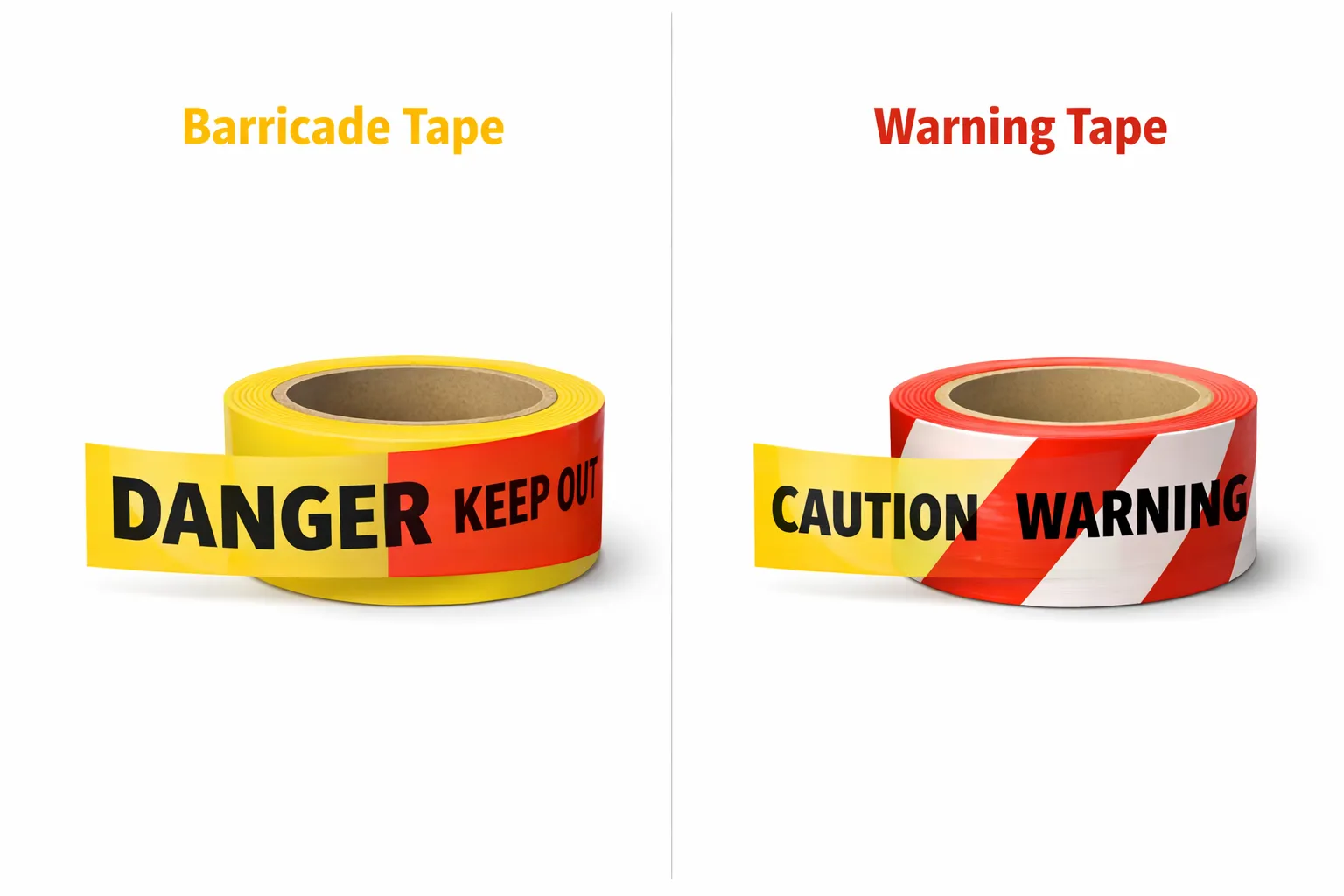
What Is Barricade Tape Used For?
Barricade Tape is used to create clear physical and visual boundaries that restrict entry into a specific area.
Common Applications:
- Construction site perimeter control
- Excavation and trench marking
- Demolition zone isolation
- Heavy machinery operating areas
- Industrial restricted zones
- Temporary road closures
It is typically used in high-liability environments where access must be strictly controlled.
What Is Warning Tape Used For?
Warning Tape is used to alert individuals about potential hazards without necessarily prohibiting entry.
Common Applications:
- Wet floor areas
- Maintenance work zones
- Utility repair areas
- Public safety alerts
- Equipment servicing zones
- Temporary hazard marking
It communicates caution and awareness rather than strict restriction.
Key Differences Between Barricade Tape and Warning Tape
| Parameter | Barricade Tape | Warning Tape |
|---|---|---|
| Primary Purpose | Restrict Entry | Alert & Warn |
| Risk Level | High / Severe | Moderate / Controlled |
| Application Type | Industrial & Construction | Maintenance & Public Areas |
| Visibility Intensity | Bold, High-Contrast | Clear but Balanced |
| Deployment Duration | Often Long-Term | Usually Short-Term |
| Material Strength | Medium to Heavy-Duty | Light to Medium-Duty |
The distinction is based on function, durability requirement, and risk communication intensity.
How to Choose the Right Tape for Your Project
Before placing an order, evaluate:
- Is entry completely restricted or just controlled?
- What is the severity of the hazard?
- Indoor or outdoor deployment?
- Expected duration of use?
- Wind and environmental exposure?
- Required thickness and tear resistance?
For high-risk construction and industrial sites, higher micron barricade-grade material is recommended. For short-term maintenance or public areas, warning-grade material may be more suitable and cost-efficient.
Technical Considerations
Thickness Guide
| Thickness | Suitable Application |
|---|---|
| 30 Micron | Short-term indoor warning use |
| 40 Micron | Standard industrial deployment |
| 50+ Micron | Heavy-duty outdoor barricading |
Higher thickness improves durability and reduces replacement frequency.
Material Options
- Virgin LDPE – Higher tensile strength and longer life
- Recycled LDPE – Cost-effective for temporary deployment
Selecting insufficient thickness may reduce initial cost but increase long-term replacement expenses.
Why Buy Directly from a Manufacturer?
- Precise micron control
- Consistent tensile strength
- Clear and durable printing
- UV-stabilized production options
- Bulk manufacturing capacity
- Reliable dispatch timelines
- Support for infrastructure and EPC projects
Direct sourcing ensures quality consistency across batches and project phases.
Frequently Asked Questions
Is barricade tape stronger than warning tape?
In most industrial applications, barricade tape is produced in higher micron thickness for added durability.
Can both types be customized?
Yes. Custom text, logo printing, and multi-language options are available.
Which is suitable for outdoor use?
For outdoor deployment, higher thickness and UV stabilization are recommended regardless of type.
Do you supply bulk industrial orders?
Yes. We specialize in large-volume production and recurring contract supply.
What factors influence pricing?
Thickness, material grade, print complexity, roll size, and order quantity.
Contact Us for the Correct Specification
Do not choose tape based only on price. Select it based on application intensity and risk level.
For fast quotation and technical guidance:
- Message us directly on WhatsApp
- Submit your requirement through our enquiry form
- Call us directly to discuss bulk or annual rate contracts
Share your application type, thickness requirement, roll size, quantity, and delivery location.
Our team will recommend the correct specification and provide a competitive commercial quotation without delay.